

Social Anxiety in Cats (and Why It Feels Uncomfortably Familiar)
Some cats walk into a room like they own it. Some cats approach strangers with effortless confidence, accept compliments, and immediately demand snacks.
And then there are the other cats - the ones who appear calm but are quietly tracking every sound, every footstep, every change in energy like it’s their full-time job.
If you’ve ever wondered whether social anxiety in cats is real, it is. It just doesn’t always look the way people expect. Cats don’t always “freak out.” Sometimes they disappear. Sometimes they freeze. Sometimes they become experts in strategic avoidance.
And sometimes, they choose one person, their safe person, and stay glued to them like a tiny, watchful shadow. That was Georgie from the very beginning.
Georgie’s Origin Story: The Cat Cafe Attachment

I met Georgie at a cat cafe, and she did something that still feels like fate: she latched onto me and didn’t leave my side. The entire time. While other cats wandered or napped or politely tolerated humans, Georgie stayed close like she’d made a decision.
It wasn’t “needy” in a dramatic way. It was more like: “You. You’re safe. I’m staying right here.” If you’ve ever had an anxious cat choose you, you know the feeling — it’s tender and intense at the same time.

That early attachment didn’t mean Georgie loved crowds. It meant she loved certainty. She picked her anchor and held on.
What Social Anxiety Looks Like in Cats
Social anxiety in cats isn’t a single behavior — it’s a pattern. It shows up most often around: new people, noise, unpredictable movement, and changes in routine.
Here are some common signs of an anxious cat or a nervous cat, especially with guests:
- Hiding when people come over (sometimes for hours)
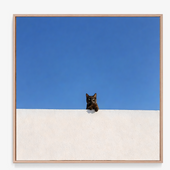
- Watching from a distance (doorways, hallways, high shelves)
- Freezing or staying unusually still instead of moving away
- Over-grooming or sudden grooming “loops”
- Startling easily at normal household sounds
- Hypervigilance: tracking motion, scanning, constant alertness
- Clinginess to one person (their safe base)
With Georgie, the biggest tell is her gift for vanishing. When guests come over, she finds the most elite hiding spots in the house — places I wouldn’t think to look. It’s not random. It’s tactical.
She’s not being “antisocial.” She’s making herself feel safe.

Anxiety in Cats vs. Social Anxiety in Cats
Not all anxious cats are socially anxious, and not all socially anxious cats are anxious all the time. It helps to separate:
- General anxiety in cats: tension that can show up daily (restlessness, frequent startle response, pacing, hiding often).
- Social anxiety in cats: anxiety triggered by people, guests, noise, overstimulation, unpredictability, and social environments.
A socially anxious cat can be perfectly content in a quiet home, then disappear the second the doorbell rings. The trigger is the social pressure — not the cat “being difficult.”
Why Some Cats Become “Hyper-Aware”
Cats are built for pattern recognition. They notice what we don’t: new voices, unfamiliar scents, different walking rhythms, louder laughter, sudden movement.
For some cats, that sensitivity becomes a kind of protective mode: observe first, avoid risk, stay alert.
It’s easy to label this as “shy,” but many anxious cats are not shy at all in the right environment. They’re selective. They’re cautious. They’re vigilant.
The Comfort Behaviors People Don’t Talk About
One of the most misunderstood things about cats is how they self-soothe. Cats have comfort behaviors that can look strange if you don’t know what you’re seeing.
For Georgie, that comfort behavior is something very specific: she still suckles for comfort.
If you’ve never heard of this, it’s more common than people think. Some cats knead, some drool, some attach to blankets — and some suckle as a soothing ritual. It’s not “weird.” It’s a coping strategy.
It often shows up in cats who:
- were weaned early
- experienced stress or uncertainty early on
- have a naturally sensitive nervous system
- use repetitive behaviors to self-regulate
The important thing is context. If your cat is otherwise healthy, eating well, and the behavior is gentle and consistent, it’s usually just a comfort routine — their version of deep breathing.
(If it becomes obsessive, causes skin irritation, or comes with appetite/weight changes, that’s a good time to ask your vet.)
What Helps an Anxious Cat Feel Safer
You can’t “force” a cat out of anxiety. But you can build an environment that supports them. With socially anxious cats, the goal isn’t to make them love guests — it’s to give them control.
1) Create permission to hide
The fastest way to help is also the simplest: let your cat have safe hiding places. Don’t pull them out. Don’t make them “say hi.” Let them opt in.
2) Build predictable zones
Set up one quiet room or corner where guests don’t go. Put a bed, water, and a familiar blanket there. Predictability reduces stress.
3) Provide vertical space
Shelves, cat trees, high perches — anxious cats love vantage points. It’s confidence without exposure.
4) Keep routines steady
Meals, play, and bedtime rituals help your cat’s nervous system relax. When everything else changes (new people, noise), routine is the anchor.
5) Gentle enrichment and play
Short play sessions before guests arrive can take the edge off. Think: low-pressure wand play, treat puzzles, and calm, familiar interactions.
Why Anxious Cats Feel So Relatable
Here’s the part no one says out loud: anxious cats make anxious people feel seen. Not in a cheesy way — in a strangely accurate way.
An anxious cat’s inner monologue is basically: “I’m fine. I’m just monitoring. I’m just aware. I’m just not ready.”
They don’t need to be fixed. They need to be understood. They need space. They need agency. They need a safe person and a safe corner and a soft place to land.
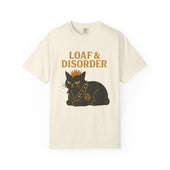
Why We Made the Social Anxiety Club Line
That’s exactly why we made our Social Anxiety Club / Overthinker collection. Not as a joke — as a quiet nod to the animals (and humans) who feel everything.
These designs are for:
- the cats who disappear when the doorbell rings
- the people who “love going out” in theory
- the hyper-aware nervous systems doing their best
- the observers, not the performers
The vibe is intentionally vintage, distressed, and a little moody - like a worn-in band tee you’ve had forever. Because anxiety isn’t shiny. It’s lived-in.
Explore the line
If you want to browse the collection, start here: Social Anxiety Club, Antidepressants, and Overthinker.


Final Thought: “Opting Out” Is Not a Personality Flaw
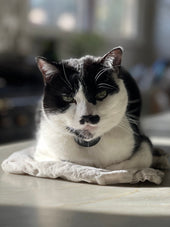
Georgie doesn’t greet guests. She doesn’t audition for attention. She chooses safety first - and when she’s ready, she reappears like nothing happened.
Honestly? Icon behavior.
If your cat is anxious, it doesn’t mean you’re doing something wrong. It means your cat has a sensitive system - and with the right setup, that sensitivity can become a strength: observant, loyal, deeply bonded, and quietly hilarious.
And if you relate a little too much… welcome to the club.





















Leave a comment